Coastal land reclamation is increasing and will continue to grow and be a popular urban strategy in places that experience urban growth.
This is according to a study, “Mapping 21st Century Global Coastal Land Reclamation,” that analyzed Landsat satellite images from 2000 to 2020 to quantify the spatial extent, scale, and land use of urban coastal reclamation of 135 cities globally with populations exceeding one million. Key findings indicate that 78% of these cities have turned to reclamation to create additional land, resulting in 253,000 hectares of new land, an area equivalent to Luxembourg.
Land reclamation is the process of creating new land from the sea. It’s often used in places with scarcity of land and high population density for many purposes. From Western Europe and West Africa to the Middle East, East Asia, and Southeast Asia, these countries’ cities reclaim lands for port extension, residential/commercial, and industrial purposes aimed at creating tourist and green spaces. Key drivers like global trade and rapid urbanization are already ubiquitous, so for the next step, these cities desire prestigious place-making efforts and enhanced international reputation.
“Coastal land reclamation is a forward-looking approach to urban development,” says Architect Ian Fulgar, the principal architect of Fulgar Architects. It allows cities to preserve valuable ecosystems and resources from urban sprawl by expanding spaces without encroaching on existing natural land. More importantly for architects, urban planners, and modern city dwellers, it presents an opportunity to have purpose-built urban environments specifically designed to meet their needs.
“Architects and urban planners can design sustainable and efficient infrastructure with a blank canvas, incorporating the latest technologies and best practices in urban planning. This approach can lead to more resilient and adaptive cities capable of mitigating the effects of climate change and other environmental challenges,” adds Architect Fulgar.
Cities that lead coastal land reclamation
Singapore, Dubai, and Hong Kong, says Architect Fulgar, are some of the world’s most notable cities with impressive urban reclamation projects. “Not only have they transformed their respective landscapes but also captured global attention,” he says.
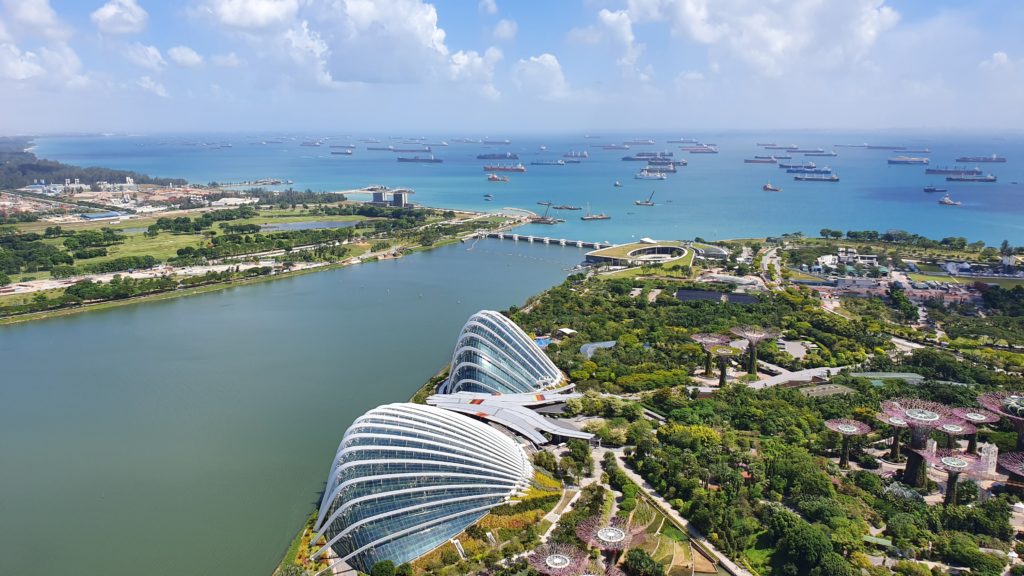
Photo credit to Anastasia Yudin. An aerial shot of Flower Dome in Singapore.
Singapore’s Marina Bay Sands and Gardens by the Bay are testaments to the city-state’s commitment to innovation and sustainability. The former is a luxury integrated resort famed for transforming Singapore’s coastline and city skyline, whereas the latter is a spectacularly unique horticultural destination that combines art, science, and nature. These reclaimed land developments further boost the country’s international reputation and real estate value around the area.
For some parts of the United Arab Emirates, coastal land reclamation has significantly changed its geography. Dubai, which has completely transformed into an ultramodern city, features ambitious projects now known as some of the most recognizable developments in the world like Palm Jumeirah and The World. “They have reshaped the coastline and established the city as a leader in innovative development, significantly elevating Dubai’s real estate value and worldwide interest,” says Architect Fulgar.
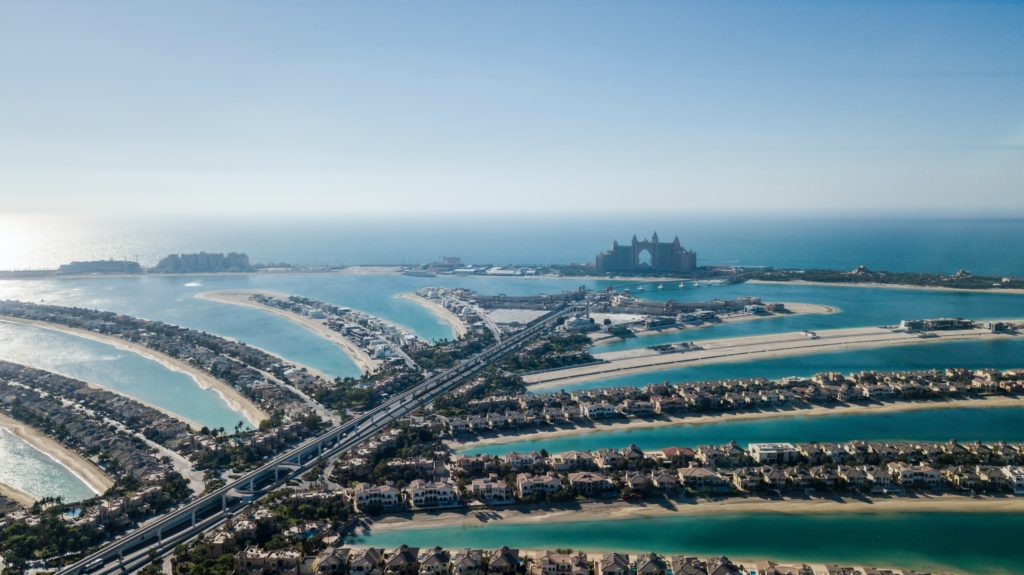
Photo credit to Abid Bin Nazar. An aerial view of Palm Jumeirah.
Palm Jumeirah is an awe-inspiring artificial archipelago shaped like a palm tree when viewed from above. It houses some of Dubai’s luxury hotels, residences, and entertainment venues. Likewise, The World is a groundbreaking project composed of small artificial islands in the shape of a world map.
Lastly, Hong Kong’s commitment to preserved art, culture, and ongoing sustainable urban development is exemplified by its West Kowloon Cultural District. It is a 40-hectare reclaimed site along Victoria Harbour’s waterfront designated as the city’s vibrant cultural quarter where the local arts scene can interact, develop, and collaborate throughout its sustainability principles.
Architect Fulgar, who firmly believes in creating spaces that foster belonging and unity, highlights that Singapore, Dubai, and Hong Kong share common denominators in their successful urban reclamation projects. These are innovative design and planning, focus on sustainability and commitment to cultural and societal development and the subsequent increase in real estate value.
“These projects have created iconic and visually striking landscapes by pushing the boundaries of engineering and urban design. Sustainability is often at the forefront, integrating practices and technologies that minimize environmental impact and enhance the quality of life for residents and visitors,” says Architect Fulgar on these cities’ commitment to sustainability atop function and aesthetics.
Best practices of coastal land reclamation
Despite recognition of world-class reclamation projects, one of their primary challenges is facing criticism and potential issues over sustainability concerns. Architect Fulgar shares that the solution is through the responsibility of vital stakeholders to adopt a collaborative approach and adaptive strategies in implementing best practices, such as prioritizing sustainability and disaster resilience goals in waterfront developments.
“The future of city development, especially in coastal areas, rests with stakeholders prioritizing sustainability and disaster resilience. By adopting a comprehensive, collaborative, and adaptable strategy, they can transform the design, construction, and management of waterfront development – ultimately creating more sustainable, resilient, and prospering urban environments that benefit both people and the environment,” adds Architect Fulgar.
Moreover, Architect Fulgar puts emphasis on a well-planned project that begins with the developers’ thorough research and analysis of the selected area about potential environmental impacts, disaster risks, and local community needs. Architects and engineers need to incorporate sustainable design principles and green and blue spaces to reduce the development’s environmental footprint.
“Trends and insights on global reclamation illustrate the potential of reclamation projects in addressing various urban development, environmental conservation, and community well-being needs – leading to more sustainable and resilient urban planning worldwide. By adopting these lessons and focusing on sustainable growth, the Philippines can capitalize on its potential and carve a path to a brighter future.”
Comments
Post a Comment